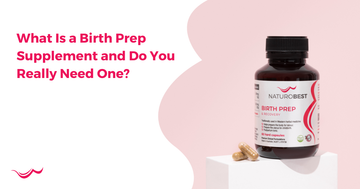


With so many prenatal vitamin supplements on the market, how on earth is a health-conscious mama supposed to choose the best one for her and her bub?
What is a prenatal vitamin?
Firstly, we should clarify the meaning of the word "prenatal". A lot of people confuse this for meaning prior to conception, however prenatal refers to pregnancy. So a prenatal vitamin is another name for a pregnancy vitamin.
Preconception
The foundation for a healthy conception and pregnancy is for both partners to follow a preconception care plan. A preconception plan includes eating a healthy (preferably organic) diet, leading a healthy lifestyle and getting to know your cycle.
Pregnancy
A prenatal vitamin is not meant to replace a healthy diet. It helps ensure your daily nutritional requirements are being met. This can be especially difficult when suffering from morning sickness. Let’s take a look at the most important nutrients and how to become supplement savvy according to your trimester:
Folate
Folate is probably the most widely known nutrient associated with a healthy pregnancy. The neural tube closes at 6 weeks gestation. Folate supply should be optimal before this happens to help prevent neural tube defects.
Most women only find out they’re pregnant between 4-6 weeks. This is why it’s a good idea to take a preconception multivitamin prior to trying to conceive.
There are 4 different types of folate:
- Folate found in food such as green leafy veggies
- Folic acid, a synthetic form only found in supplements
- Folinic acid, a type of activated folate found in food and supplements
- Active folate, otherwise known as 5-methyltetrahydrofolate (5-MTHF).
Active folate comes in two forms – bound to a calcium salt (levomefolate calcium) or a glucosamine salt (levomefolate glucosamine), otherwise known as Quatrefolic®.
Folic acid must go through several biochemical steps to be converted into active folate. Active folate on the other hand, is absorbed immediately and available for use by the body.
Vitamin B12
If you are vegetarian or vegan you may struggle to get enough of this nutrient from your diet. Vitamin B12 helps support energy levels and is also involved in DNA synthesis.
In other words, it may be just as important as folate in the prevention of neural tube defects.
There are 4 different types of B12:
- Hydroxocobalamin is the type found in food and is also found in B12 injections (from your doctor) and supplements.
- A cheap form found in supplements is cyanocobalamin.
- The two active forms found in supplements are methylcobalamin and adenosylcobalamin. Hydroxocobalamin converts into the two active forms.
Vitamin B6
Several studies have found a reduction in morning sickness when taking 75mg of vitamin B6 daily. In the studies, they took either 25mg three times daily or 37.5mg twice daily. The frequency (versus taking it once daily) is because B6 is a water-soluble vitamin and you will pee it out within a few hours, hence needing to top up throughout the day.
Ideally, you should take the active form of vitamin B6, pyridoxal-5-phosphate as that is bioavailable. The cheaper form, pyridoxine hydrochloride may not be absorbed by the body if you are lacking the enzyme pyridoxal kinase.
Choline
This important nutrient is required in huge amounts during pregnancy. The RDI is 440mg daily! Choline is a precursor to the neurotransmitter acetylcholine which is important for memory.
Eggs are a great source of choline with 126mg per egg. Of course, you probably won’t be eating eggs every day. It is likely your diet will fall short of the 440mg needed daily.
VitaCholine® is the cleanest form of choline bitartrate on the market and it's the only choline used in NaturoBest supplements.
Lutein
Lutein is a carotenoid antioxidant that concentrates in the retina and brain from early in pregnancy and continues to accumulate in foetal and infant tissue throughout gestation and lactation. It isn't included in every prenatal formulation, so it's worth checking your label if this is a nutrient you'd like covered.
A study following the Project Viva cohort found that mothers with a higher combined intake of lutein and zeaxanthin during pregnancy had children with better verbal intelligence and behaviour regulation scores in mid-childhood, compared to mothers with lower intakes (Mahmassani et al., 2021). A separate review of paediatric research also points to a role for lutein in supporting the eyes and brain as they mature in early life (Gazzolo et al., 2021).
FloraGLO® is the branded from of lutein used in the majority of published research into lutein during pregnancy, lactation and infancy.
Vitamin C
If you are eating plenty of fresh fruit and veggies, this vitamin should be in abundance in your diet. It does assist with iron absorption so it is an important pregnancy vitamin. You can have too much of a good thing though.
High doses of vitamin C are known to act as a mild laxative. That can have harmful consequences during pregnancy. Although you may take vitamin C supplements when you have a cold, don’t take more than 2000mg per day.
Iodine
In Australia, the public health recommendation is for pregnant women to take a daily supplement containing 150mcg of iodine. The recommended daily intake is 220mcg daily in pregnancy and 270mcg during breastfeeding.
Iodine is required for healthy thyroid function and baby’s brain development. Good sources of iodine are fish, iodised salt (or Himalayan crystal salt) and eggs.
Iron
Iron requirements increase significantly in the second half of pregnancy as maternal blood volume expands. In contrast, iron supplementation during the first trimester can worsen nausea and vomiting, particularly for women experiencing morning sickness.
For this reason, it is ideal to have iron stores (ferritin) assessed well before conception, allowing time to build levels if needed. If ferritin is particularly low, discussing the option of an iron infusion with your doctor may be appropriate.
Optimising iron status ahead of pregnancy can reduce the need for iron supplementation in the first trimester. Once nausea has settled, typically around weeks 14 to 16, a prenatal supplement containing a well-tolerated, low-constipation form of iron, such as iron bisglycinate, can be introduced.
While the recommended daily intake of iron during pregnancy is 27 mg, Australian listed complementary medicines are limited to a maximum of 24 mg per daily dose.
Vitamin D
Vitamin D supports calcium absorption and bone mineralisation, and also plays a role in maintaining immune system health during pregnancy. In Australia, the recommended blood level of vitamin D (25-hydroxyvitamin D, or 25-OH-D) is 50 nmol/L or above at all life stages, including pregnancy, with levels below this classified as mild, moderate or severe deficiency depending on how far they fall short (Paxton et al., 2013; The Royal Children's Hospital Melbourne, 2020).
Around 90% of the body's vitamin D is made in the skin through sunlight exposure, with only small amounts available from food, mainly oily fish. Breastmilk itself contains almost no vitamin D. The Adequate Intake set by the National Health and Medical Research Council is 5 micrograms (200 IU) daily for pregnant women, the same as for the general adult population, based on the assumption of reasonably regular sun exposure (NHMRC & Ministry of Health, 2014).
Women who cover most of their skin for cultural or religious reasons, have naturally dark skin, have a BMI over 30, or spend most of their time indoors are at greater risk of deficiency and may need a higher dose. It's worth asking your doctor for a 25-OH-D blood test at your first antenatal visit if any of these apply to you. Maternal vitamin D deficiency has been associated with neonatal hypocalcaemic seizures and impaired skeletal development in the baby, which is why cholecalciferol (vitamin D3) supplementation is recommended for women who are found to be deficient or at higher risk (Paxton et al., 2013).
Most vitamin D3 used in supplements is derived from lanolin, a fat extracted from sheep's wool, which isn't suitable for vegans. NaturoBest instead uses VegaDelight®, a vitamin D3 sourced from lichen, making it suitable for vegans and vegetarians. It's also formulated with only one added excipient, compared with 6 excipients in the other vegan D3 available on the market, keeping the formula as clean as possible.
VegaDelight® is included in NaturoBest's Calcium & Magnesium Plus K2 & D3 formula, alongside natural vitamin K2, to support calcium absorption and bone health throughout pregnancy, breastfeeding and beyond.
Calcium
This mineral is also in high demand, especially when baby’s bones are growing. If you eat dairy products, you may find it easier to meet your recommended daily dose of 1200mg daily during pregnancy.
If additional calcium supplementation is required, it’s best to take it separately from your prenatal vitamin. Calcium can interfere with the absorption of iron and zinc, so spacing doses improves uptake. Many practitioners recommend taking calcium and magnesium in the evening, as these minerals have a calming effect and may also support a more restful night’s sleep.
Magnesium
This mineral is involved in over 300 enzyme reactions making it a pretty important mineral throughout all stages of life! Like any supplement, there are cheap forms that aren’t absorbed well. There are also high quality, well-absorbed forms like magnesium citrate and magnesium bisglycinate.
Just make sure you look at the “elemental” amount on a supplement label (sometimes labelled as “equivalent”). That is the true amount of magnesium that is in each capsule or scoop of powder.
Copper
Copper helps to form blood cells but luckily it is easy to get the RDI of 1.3mg from your diet (naughty tip - it’s even found in chocolate!) Levels of copper rise naturally during pregnancy so there is usually no need to supplement.
Zinc
This is one of the most important minerals throughout the entire preconception, pregnancy and postnatal period. Zinc activates over 200 different enzymes in the body.
Some people find high dose zinc supplements make them feel nauseous. The RDI of zinc is 11mg daily so you might want to stick to this dose during the first trimester when your tummy is a bit more sensitive.
Does your prenatal vitamin make you feel nauseous?
It might be the iron content in there or sometimes high dose zinc or B vitamins can make people feel queasy. Try switching to a formula specifically designed for the first trimester to reduce morning sickness. Always take your vitamins after a meal.
What to do if you have trouble swallowing it
Pregnant women often have a sensitive gag reflex. Anything as simple as brushing teeth or swallowing capsules can be difficult when you’re suffering morning sickness. Try opening the capsule and mixing with a bit of yoghurt or throw into a smoothie to disguise the taste.
What else to look for in a quality prenatal vitamin
Beyond individual nutrients and their forms, a few formulation details are worth comparing when you're choosing between prenatal vitamins.
Excipient load is one. Many tablets and capsules rely on a long list of fillers, binders, disintegrants, film coatings and anti-caking agents such as magnesium stearate, microcrystalline cellulose, stearic acid or titanium dioxide, to bulk out and stabilise the formula.
NaturoBest's formulas use only three added excipients across the whole range: calcium hydrogen phosphate (often used as a calcium supplement), calcium silicate (calcium bound to silica, a mineral that is often taken as a supplement for healthy hair and nails) and ascorbyl palmitate, a fat-soluble form of vitamin C.
Capsule material is worth checking too, particularly if you have a pine allergy, which is common among people with asthma. Standard vegetable capsules and microcrystalline cellulose is derived from pine. NaturoBest is currently the only prenatal vitamin company using pullulan capsules across its range, an allergen-free alternative.
It's also worth considering whether a formula has been designed holistically. Nutrients rarely work in isolation and taking one mineral on its own, in excess, can create a deficiency in another.
Calcium taken alone, for example, can interfere with magnesium absorption, and vice versa, so a well-designed prenatal should account for how nutrients interact with each other, rather than simply maximising individual doses.
Finally, country of origin, certifications and independent recognition can offer some reassurance of quality and consistency. NaturoBest is made in Australia, Vegan Australia Certified and has won multiple awards including Best Product Innovation by Australian Business Awards, Best Pregnancy Supplement by Product Review two years in a row, 2 Telstra Awards for Championing Health and Outstanding Growth, as well as 2 Silver AusMumpreneur awards in 2020 for Health & Wellbeing and Product Innvoation.
If you'd like help matching a formula to your stage of pregnancy, explore the NaturoBest prenatal vitamin range.
References
Mahmassani, H. A., Switkowski, K. M., Scott, T. M., Johnson, E. J., Rifas-Shiman, S. L., Oken, E., & Jacques, P. F. (2021). Maternal Intake of Lutein and Zeaxanthin during Pregnancy Is Positively Associated with Offspring Verbal Intelligence and Behavior Regulation in Mid-Childhood in the Project Viva Cohort. *The Journal of Nutrition*, 151(3), 615–627. https://doi.org/10.1093/jn/nxaa348
Gazzolo, D., Picone, S., Gaiero, A., Bellettato, M., Montrone, G., Riccobene, F., Lista, G., & Pellegrini, G. (2021). Early Pediatric Benefit of Lutein for Maturing Eyes and Brain—An Overview. *Nutrients*, 13(9), 3239. https://doi.org/10.3390/nu13093239
Lorenzoni, F., Giampietri, M., Ferri, G., et al. (2013). Lutein administration to pregnant women with gestational diabetes mellitus is associated to a decrease of oxidative stress in newborns. *Gynecological Endocrinology*, 29(10), 901–903. https://www.tandfonline.com/doi/abs/10.3109/09513590.2013.808329